
Church of San Pietro
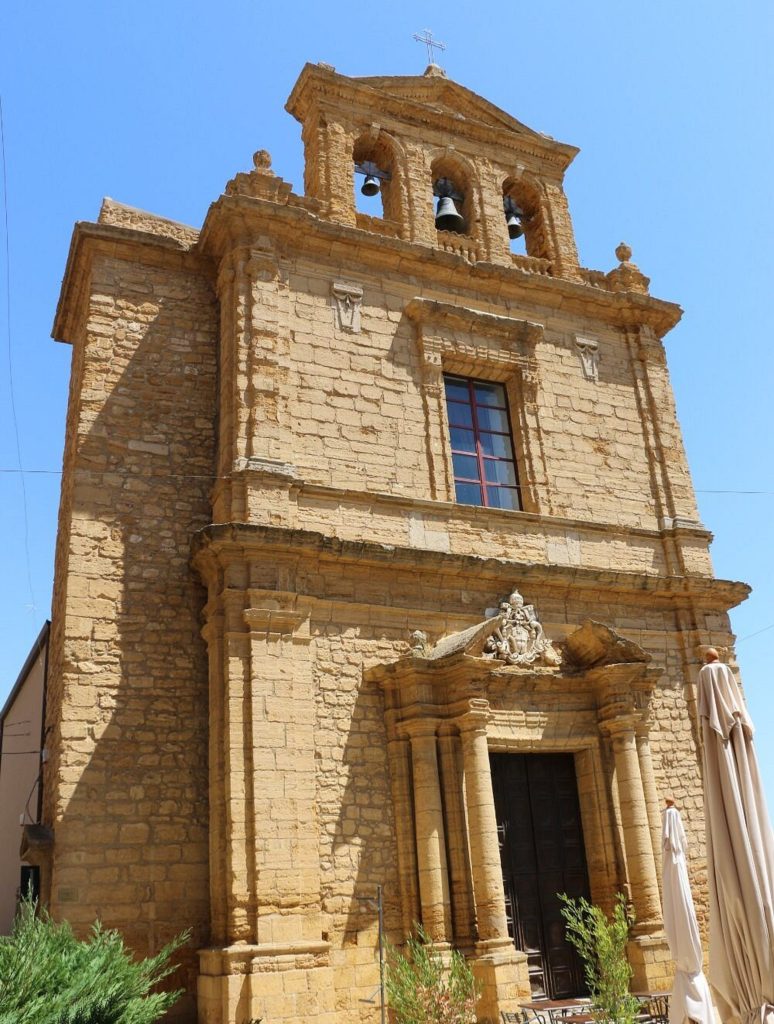
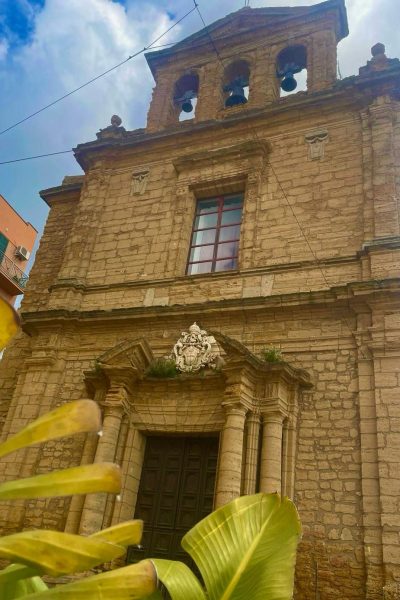
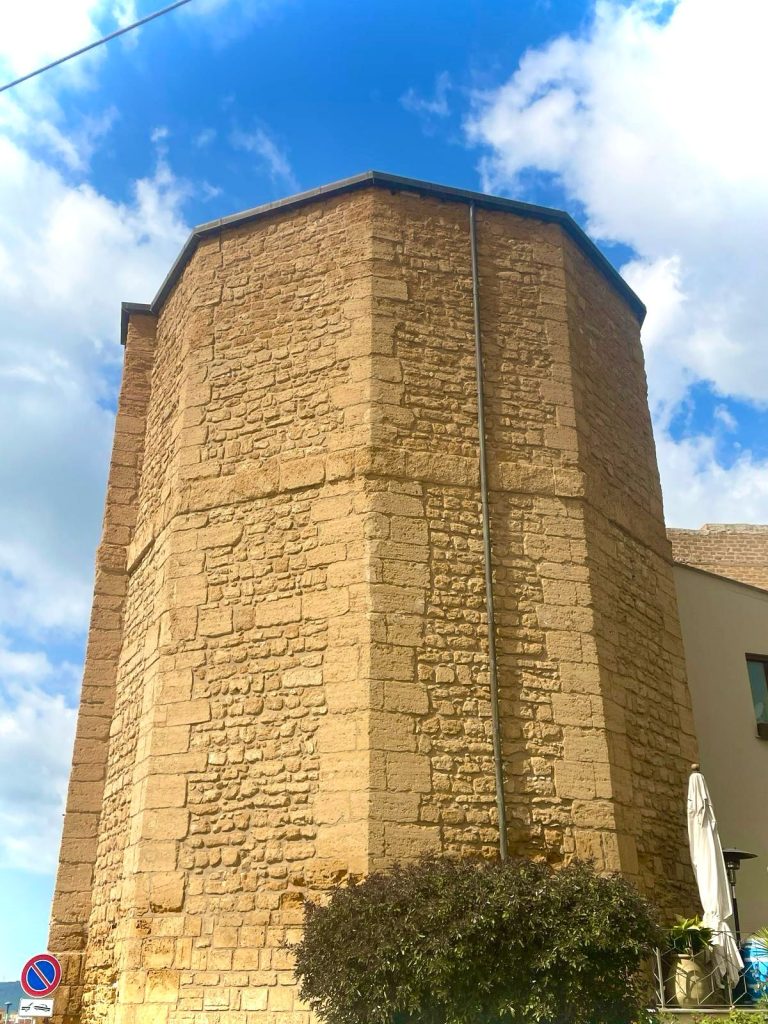
On the tight and characteristic Via Pirandello (parallel to the Via Atenea) there is the eighteenth century neoclassical church of San Pietro. It stands on the square of the same name, from whose terrace you can enjoy an enchanting panoramic view of the Valley of the Temples and the coast (from Punta Bianca to Porto Empedocle), of remarkable beauty especially in the evening, with the lights that illuminate the Temples. The Church of San Pietro was built in the second half of the eighteenth century, between 1773 and 1795, on the site of another older one, dedicated to St. Peter too, dating back to 1416 (but according to other testimonies also before that date). According to tradition, it was St. Peter who appointed the first bishop of the Agrigento diocese, San Libertino. The existence of a village "Sancti Petri" outside the walls is attested by several medieval documents and together with the San Francisco area, it constituted one of the increasingly populated areas of the medieval city. The first document in which the existence of the Church is mentioned dates back to September 4, 1491 and it is a notarial deed of Matteo Schillaci di Girgenti. Closed for decades, due to several collapses, today the Church is no longer used for worship, so it is deconsecrated, but returned to its ancient splendor and used as a cultural center. The restoration work has in fact fully returned the eighteenth-century beauty of the external facade that stands out with its volume and the golden color of the sandstone tuff. The main facade of the church is the most interesting part of the outside, in fact it presents the relief of a majestic portal, with four columns, with Doric-style capitals and with a broken and open pediment, in whose central part there is the papal coat of arms carved with the tiara and keys, representing the temporal and spiritual power of the Roman popes. In the second order, above, there is a large rectangular window with a closed pediment; then there are two angular pilaster strips, surmounted by two Ionic capitals holding a frame on which the bell tower is based, characterized by three equal aedicules, interspersed with four pilaster strips with Corinthian capitals. The triangular pediment with the cross, two bases of side vases and a long balustrade, crown the imposing facade of the church. The single nave structure has a barrel vault where several white floral stuccoes stand out with colored bottoms. The walls are embellished with paintings of considerable artistic interest: the Holy Family and the beautiful fresco of the vault are the work of the painter Giuseppe Crestadoro from Palermo. The inhabitants of Agrigento are very close to the beautiful Church of San Pietro, also because of Luigi Pirandello who spent his childhood in a house just in front of the church and wrote one of his most beautiful short stories: La Madonnina ("Novels for a year") inspired by the same church. In this novel he used, as characters, his neighborhood. His house, in fact, overlooks the church square (the house where he was born is in the countryside and it has been turned into a museum today) and a stone remembers how "in this house, in the heart of old Girgenti, he experienced the drama of man and transferred it to universal literature".
The beneficent Father Fiorìca was the parish priest of a small and humble parish, a quite place populated by simple believers. However, the devil often insinuated himself into his life in different forms, such as a beautiful bone snuffbox with the image of the Holy Father given to him by an old lady of the parish, who had gone to Rome for the Jubilee celebrations even though poor Father Fiorica had never touched tobacco in his life or the innocent love of Marastella, who was a poor little brainless girl, dear to the entire neighborhood who, because of the devil, focused her attentions on Father Fiorica who was already about sixty years old and with hair as white as snow. The greatest event for the parish priest, however, was the story of Guiduccio, a nine-year-old boy, the only son of the Greli family, known for their distance from the Church. One day, after an episode of anger from his father, who even shot at the church bells because he could no longer bear to be disturbed during his rest, the child entered the church and was fascinated by it, devoutly approaching the faith under the guidance of his father Fiorìca. The turning point came during the drawing of a wax Virgin , which was assigned every year to a parishioner. Father Fiorìca fervently hoped that the statuette would go to Guiduccio, convinced that it could bring the Greli family closer to the Church. But the devil, always lurking, pushed him into temptation: in a moment of weakness, he rigged the drawing so that the child's name was drawn. Guiduccio's innocence, however, soon led him to discover the situation. Deeply disappointed, the child did not attend the church any longer, leaving an inconsolable pain in the heart of Father Fiorìca.
A box of toys, one of those with the small trees crowned with wood chips and with the wooden disk glued under the trunk so that they can stand up, and the houses and the little church with the bell tower: here, imagine one of these boxes, given in the hand of Jesus, and that he had enjoyed building the beneficial father Fiorica that little parrish like this; the modest little church, dedicated to St. Peter, in the front; and over here, the rectory with three windows sheltered by starched muslin curtains that, by the glimpse of the glass over there, let them feel the whiteness and quiet of the rooms full of silence and sun; the little garden next door, with the pergola and the medlars of Japan, the pomegranate, the oranges and lemons; and then, all around it, the humble little houses of its parishioners, divided by alleys, with many pigeons that fluttered from eaves to eaves; and many rabbits that, close to the walls, spied collected and trembling, and greedy chickens and pigs always a little distressed, you know, and almost irritated by the overfatness.